

Click here SUSOMOY FITNESS
What is obesity?

Types of Obesity
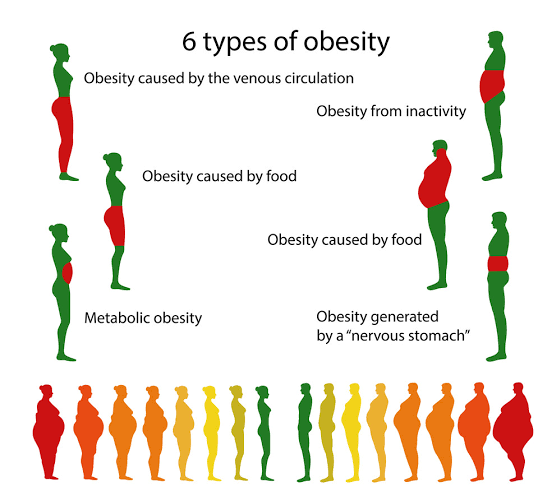
1. Food Obesity.
2. Thickness due to Nervous Stomach.
3. Gluten diet.
4. Genetic metabolic Obesity.
5. Venous Circulation Obesity.
6. Inactivity Obesity.
Four phenotypes of obese :
(1) Normal Weight Obese (NWO):
Normal-weight obese (NWO) syndrome-in women with normal weight and body mass index but whose fat mass is >30% of their total body weight.
(2) Metabolically Obese Normal Weight:
metabolically obese was hypothesized that these individuals might be characterized by hyperinsulinemia and (or) insulin resistance, as well as by hypertriglyceridemia and high blood pressure despite having a body mass index (BMI) < 25 kg.
(3) Metabolically Healthy Obese:
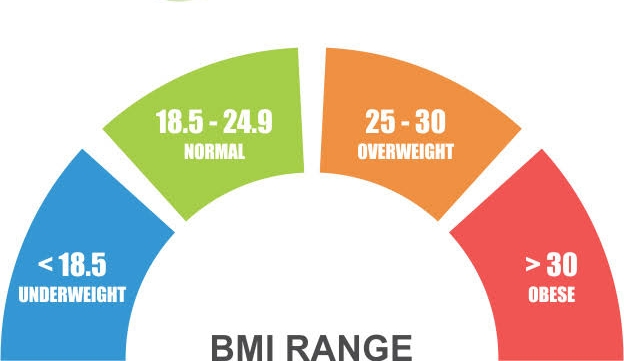
metabolically healthy obesity has a body mass index (BMI) of over 30, but they do not have metabolic syndrome. Metabolic syndrome consists of high blood pressure, cardiovascular disease, type 2 diabetes, and high cholesterol.
(4) Metabolically Unhealthy Obese or “at risk” obese:
Metabolically healthy obesity has a body mass index (BMI) of over 30, but they do not have metabolic syndrome.
Metabolic syndrome
Metabolic syndrome consists of high blood pressure, cardiovascular disease, type 2 diabetes, and high cholesterol.
What is child Obesity?
When a child weight well above the average for a child’s height and age this is call child Obesity.
What are the main Cause of Obesity?
1. Lack of physical activity
2. Unhealthy diet
3. Liquid calories(soft Drinks and Hard Drinks)
4. Lack of sleep
5. Stress
6. Slower metabolic rate
7. Microbiome
8. Genetics
9. During pregnancy
10. Polycystic ovary syndrome (PCOS)
11. Cushing syndrome
12. Prader-Willi syndrome
13. Hypothyroidism
14. Osteoarthritis (OA)
15. Depression
16. Quitting smoking
17. Antidepressants
18. Steroids or Birth control pills
19. Environment
20. Hormonal imbalance
What are the complications of obesity?
1. Heart disease
2. Gallbladder disease
3. Cancers
4. Type 2 diabetes
5. High blood pressure
6. Fatty liver disease
7. Stroke
8. Breathing problems
9. Arthritis
10. High Cholesterol
11. Digestive problems
12. Gynecological and Sexual Problems
13. Severe COVID-19 symptoms
How to Prevent Obesity?
1. Follow a Calorie Deficit Diet
2. Eat 5-6 meals in whole day
3. Eating Slowly and only when Hungry
4. Perform Cardio Exercises
5. Perform Resistance Exercise
6. Take Proper Sleep
7. Perform Flexibility Exercises
8. Consume good fats source
9. Consume Complex carbohydrate source
10. Consume Sufficient Protein


 SUSOMOY FITNESS